Every asset arriving at our facility is classified first — waste requiring destruction, waste eligible for recovery, or goods transferring ownership. Getting that classification right determines the documentation you receive. Three routes. One compliant, auditable workflow.

Businesses are legally required to dispose of electronic waste through certified channels. Failure to comply risks fines, environmental damage, and reputational harm. Our WEEE recycling service ensures full compliance and environmental responsibility.
Meet WEEE Directive requirements and avoid costly penalties for improper disposal.
Divert hazardous waste from landfill while recovering valuable raw materials.
Show customers and stakeholders that your business takes sustainability seriously.
The wrong legal classification means the wrong documents — and real compliance exposure for your organisation.
No processing begins until every item has been logged and classified. Classification determines your documentation — and getting it wrong creates compliance risk. If in doubt, we obtain written clarification before proceeding.
Equipment is unloaded to our quarantine area (Q1). Photographic evidence is captured at delivery, during unloading, and once unloaded — creating an immediate audit trail on arrival.
All items are added to our asset management system. Serial numbers are recorded where required by the client. Asset labels are applied to every item before anything is moved.
All data-bearing devices (HDDs, SSDs, NVMe, mobile storage) are identified and immediately labelled QUARANTINED. They are moved to a designated controlled area and held there until the data destruction or sanitisation workflow is completed — regardless of which route the asset takes.
Each item is assessed against client instructions and condition. The outcome determines the entire downstream workflow:
Both routes apply when items are legally classified as waste. The difference is whether the client requires full physical destruction or permits recovery and reuse.
Removed and physically destroyed (digital destruction preferred). Photo and video evidence captured. Destruction event logged in our asset management system.
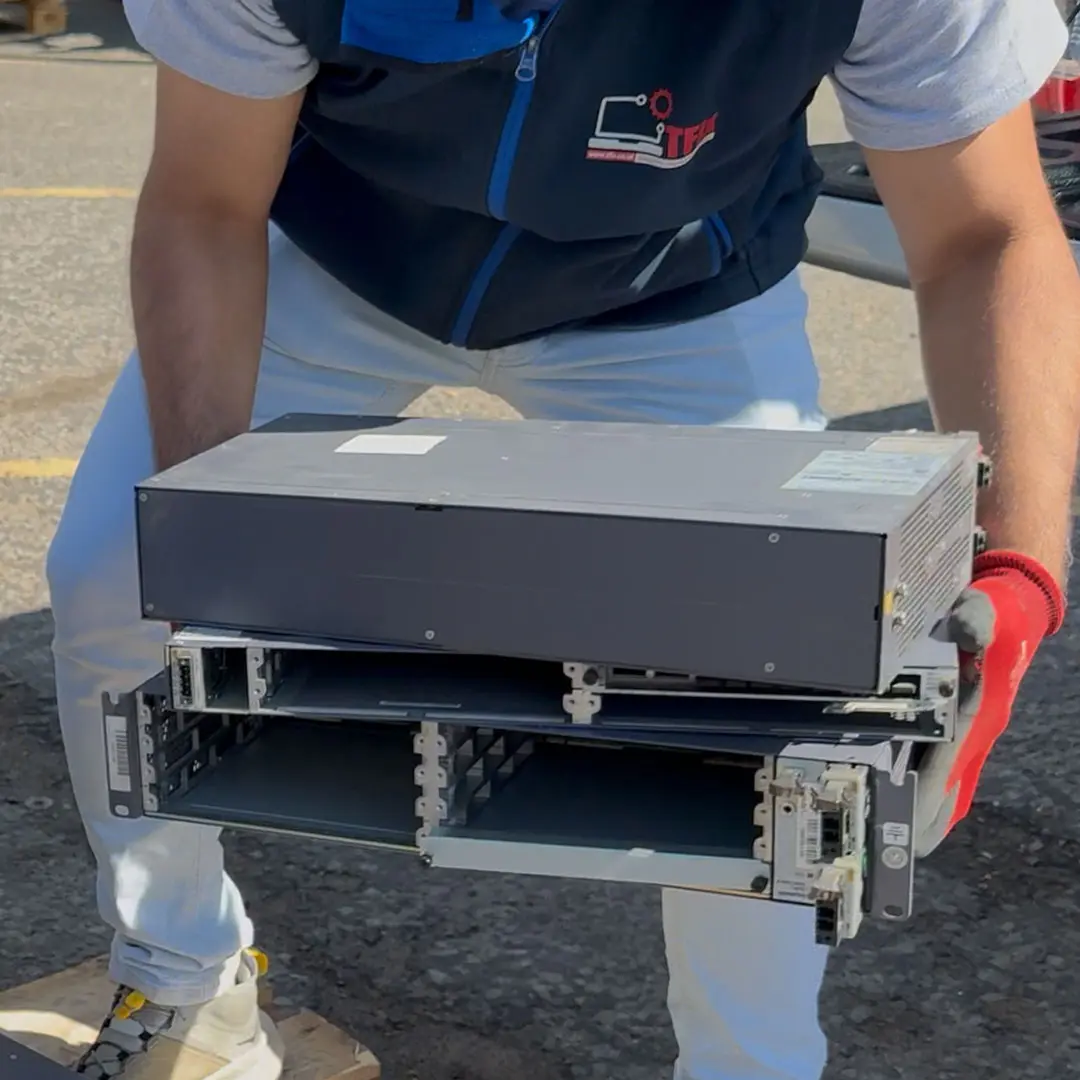
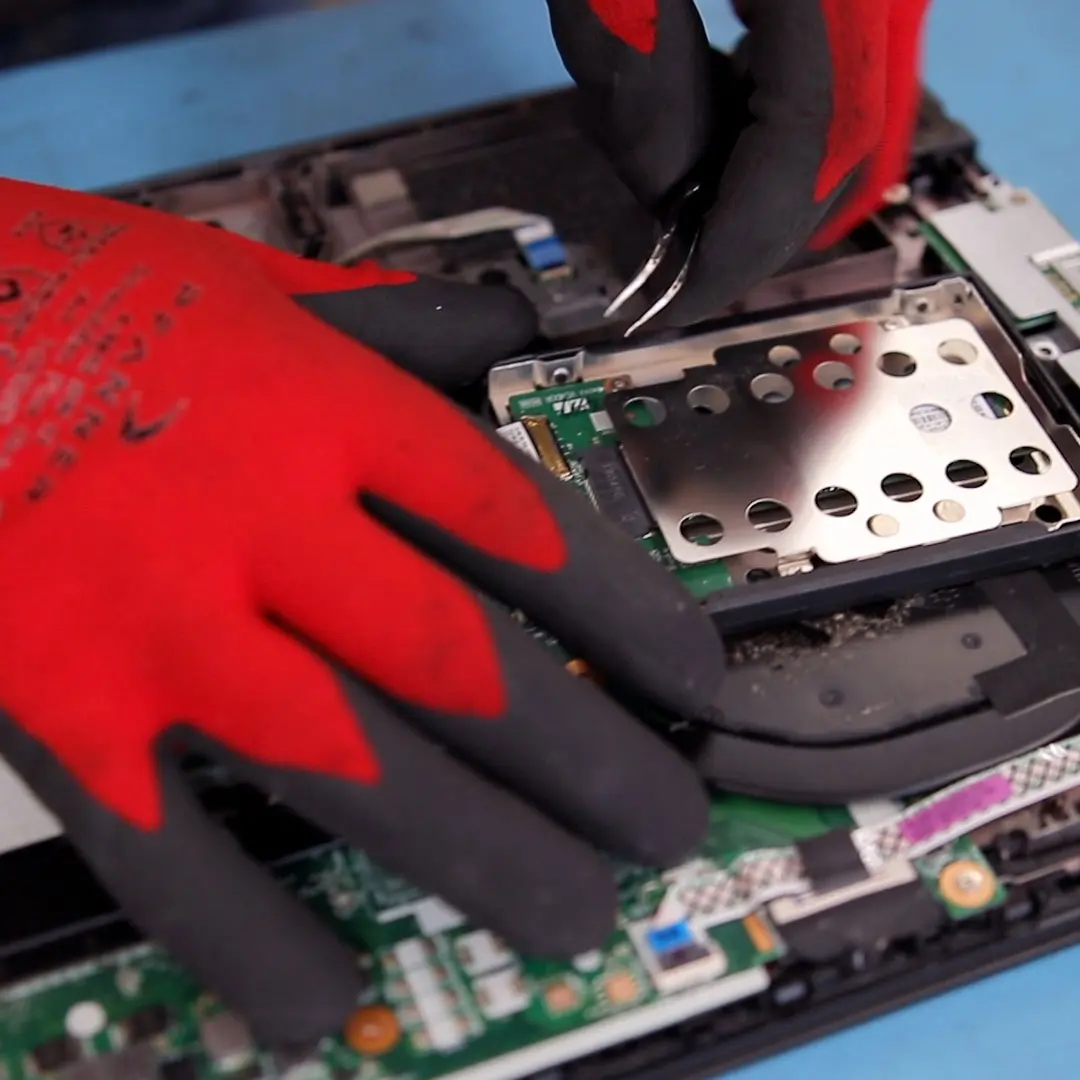
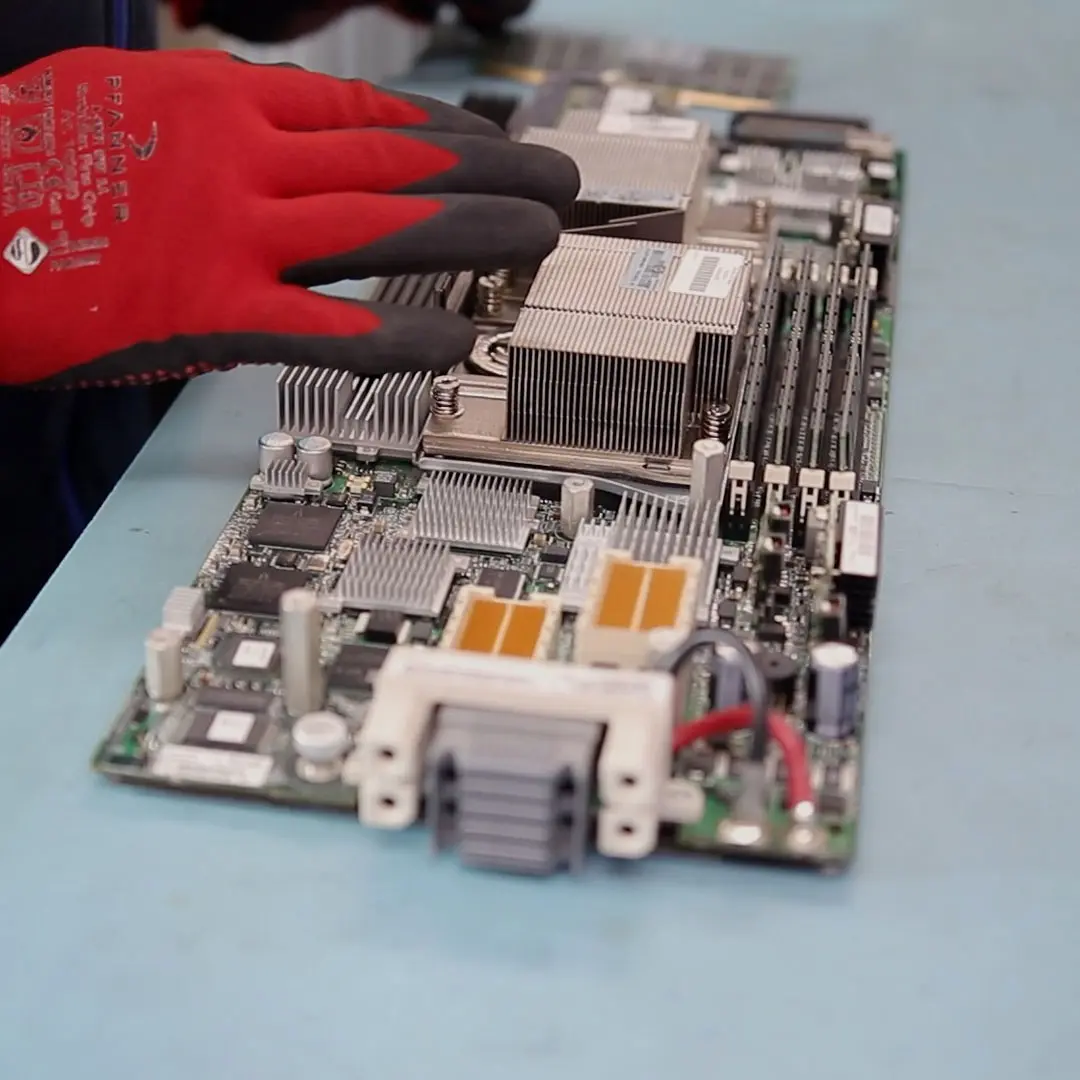
Dismantled, chassis and boards crushed or shredded. Materials harvested where possible. Photographic evidence captured throughout.
QUARANTINED labels applied on arrival. Moved to a designated controlled area. Data sanitisation completed before any further handling. Certificates and reports provided.
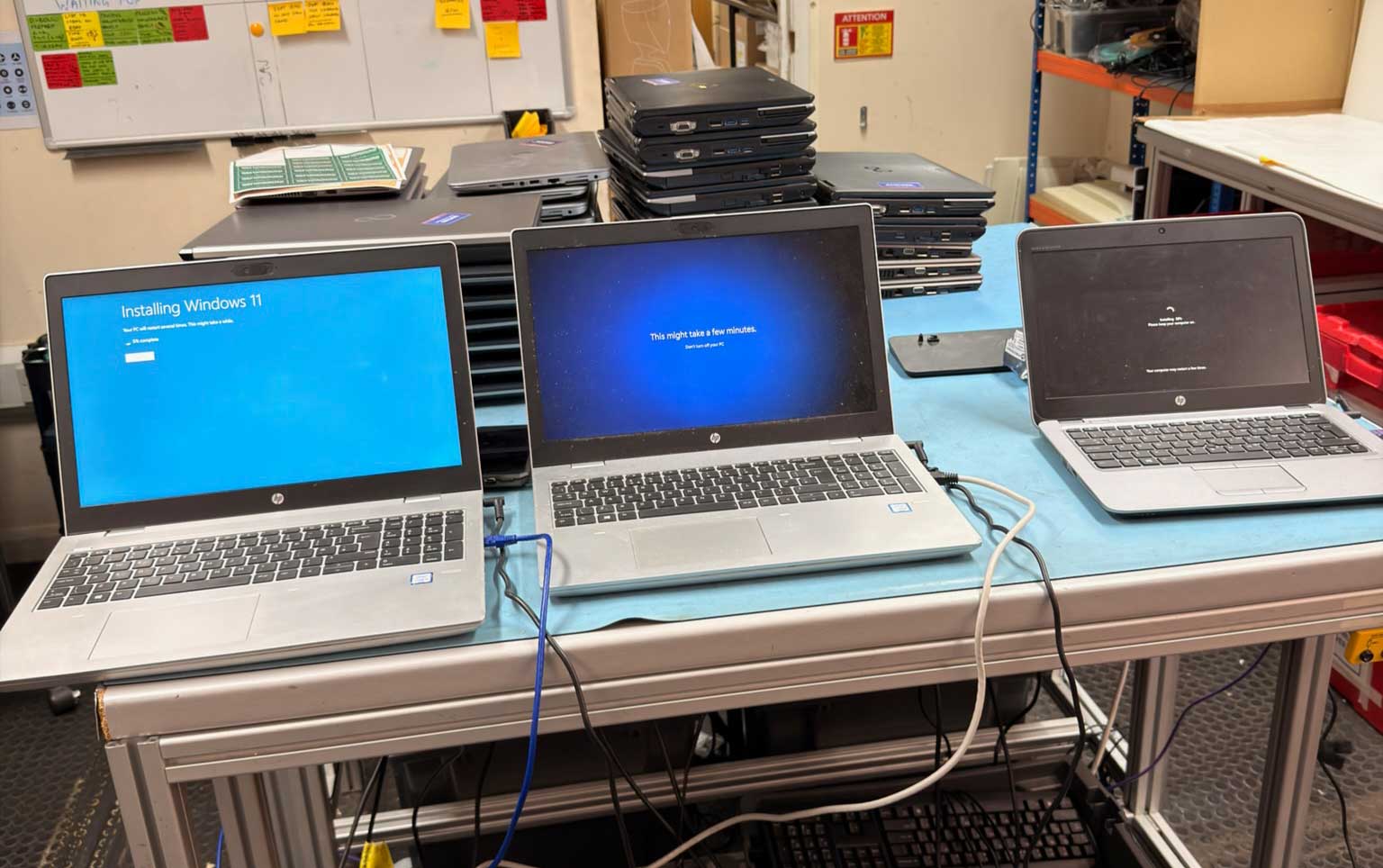
Assets are graded using our I-Grade system. Recoverable units (Grades I-A to I-C) undergo test, repair, de-branding, and a full factory reset before leaving our facility. Parts-only items are harvested. Remaining scrap is processed downstream. End-of-Waste determination applied where eligible.
Legal status: Goods | No WTN issued | No EWC code | Ownership transfers
If your organisation is transferring ownership of IT equipment with the expectation it will be reused, these items are legally goods, not waste. Issuing a Waste Transfer Note in this scenario is a compliance error.
Instead, a signed Asset Ownership Transfer Agreement confirms transfer of title and authorises reuse. Data-bearing devices still receive the full sanitisation workflow and certificates.
This pathway is handled under our Asset Recovery service — choose between Instant Buyback or Profit Share to maximise return on surplus hardware.
Learn about Asset RecoveryOn Route B, every recoverable asset is graded before any decision is made on test & repair, parts harvest, or scrap. Grade determines recovery potential and directly influences the rebate offset applied to your charges.
High refurb potential
Boots clean, no wear, good display
Refurb possible
Light wear, minor marks
Low refurb potential
Dents, pressure marks, display issues
Scrap / parts likely
BIOS/MDM lock, cracked or swollen
Faulty / dead
No power, burn marks, bent board
Every document we issue is route-specific. The table below shows exactly what is and isn't applicable based on how your assets are classified.
| Document | Route A Waste Destruction | Route B Waste Recovery | Route C Goods / Asset Recovery |
|---|---|---|---|
| Waste Transfer Note (WTN) | |||
| EWC Code & Waste Weight Record | |||
| Certificate of Physical Destruction | |||
| Data Sanitisation / Destruction Certificate | |||
| Asset Ownership Transfer Agreement | |||
| ESG / Environmental Weight Report | Optional | N/A | |
| Photo / Video Evidence |
Route C documentation and commercial handling is managed under our Asset Recovery service.
Every asset we process reduces landfill, saves resources, and contributes to your organisation’s sustainability goals. We track and report measurable outcomes for compliance and ESG reporting.
We ensure all WEEE is dismantled and processed responsibly through approved recycling channels.
Recycling materials avoids thousands of kg of CO2 emissions compared to raw extraction.
Precious metals, plastics, glass, and PCBs reintroduced into manufacturing supply chains.
Environmental impact data provided for internal CSR and ESG reporting frameworks.
Key questions about our classification-first WEEE recycling workflow.
Both apply when items are legally classified as waste. Route A is for full physical destruction — no reuse, Certificate of Physical Destruction issued. Route B is for recovery: assets are graded, data is sanitised, recoverable items are refurbished or parts-harvested, and any recovery value is offset against your charges.
When assets are not being discarded as waste — Route C. If your organisation is transferring ownership of equipment with the intent for it to be reused, those items are legally goods, not waste. Issuing a WTN in this scenario is a compliance error. Route C is handled under our Asset Recovery service.
A COD is a formal document confirming that specific assets — and their data-bearing components — have been physically destroyed beyond recovery. It applies to Route A only. It lists the assets destroyed, the method used, and captures photographic or video evidence. It is the highest level of assurance for clients who cannot permit reuse.
On Route B, every recoverable asset is assessed using our I-Grade system. Grades I-A and I-B assets have refurb and resale potential — the recovery value generated is applied as a credit offset against your collection and data security charges, reducing your invoice. It is not a buyback programme. For a commercial surplus programme, see Asset Recovery.
All data-bearing devices are identified on arrival, QUARANTINED-labelled, and moved to a designated controlled area before any further processing. Route A: physical destruction (shredding preferred) with photo/video evidence. Route B and C: full sanitisation workflow with certificates. Nothing leaves our facility with data intact. See our Certified Data Destruction service.
Yes. Classification happens per item, not per job. A single pallet can contain assets routed to Route A (destruction) and Route B (recovery) based on client instructions and individual asset condition. We log each item separately so your documentation is accurate at asset level, not just job level.
Simple, route-based processing rates for compliant WEEE recycling. Collection is quoted separately.
Best for one-off clear-outs.
For recurring WEEE streams.
For multi-site governance and SLA needs.
Prices exclude VAT. Recycling rates cover processing and compliance documentation only; collection and transport are quoted separately under Secure WEEE Collection. Final pricing depends on route mix (A/B), data-bearing volume, and hazardous fractions; Route B credits are applied where recovery value exists.
Helpful reads on common questions, real scenarios, and what to expect.
Recycle unsellable IT assets responsibly. We dismantle equipment and route materials to approved partners with full compliance documentation and 0% landfill policy.